
Refractories
Induction Furnace Lining Materials
Silica-based dry lining and neutral/basic spinel linings for cast iron and steel melting.
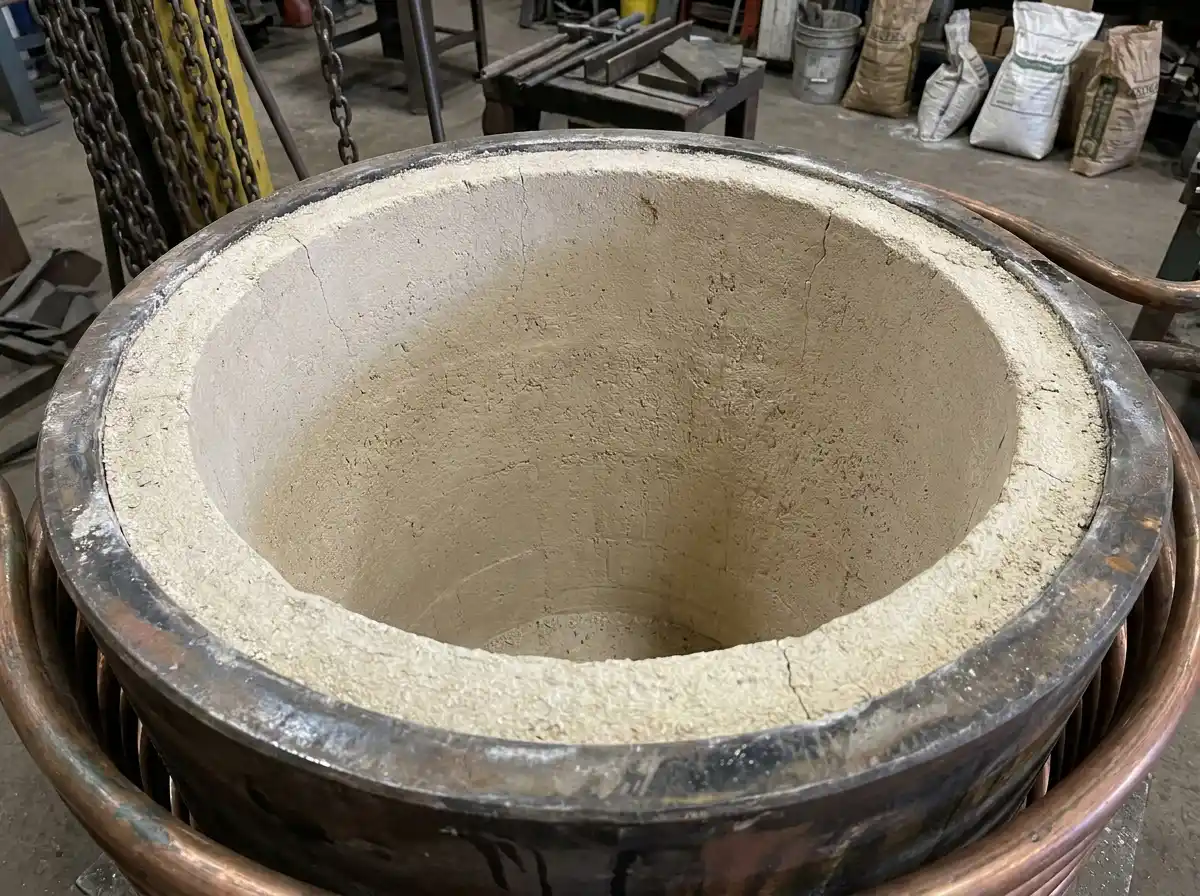
The induction furnace lining holds molten metal and slag while insulating the metal from the coil. Dry vibratable lining mixes are compacted around a former placed inside the furnace and sintered on first heating to create a hard inner layer. Lining quality determines both service life and metal cleanliness.
Types: Silica-based linings (high SiO2) are common in cast iron and low-alloy steel melting; they are economical and tolerant of thermal shock. Neutral linings (alumina-magnesia spinel, Al2O3-MgO) are used for manganese steel and high-temperature work. Basic linings (magnesia-based) are preferred for high-manganese steel and melts with aggressive slags. Selection depends on the metal melted, slag chemistry and operating temperature.
Lining life depends on the sintering schedule, grain size distribution, binder additive and the operating thermal cycle. Heating and cooling rates must be controlled, and the furnace should not be left empty for long periods.
Product details
- Types
- Silica-based, neutral (spinel), basic (magnesia)
- Grain size
- 0-4 mm; different distributions according to furnace capacity
- Application
- Dry vibration ramming
- Packing
- 1 tonne big bag, 25 kg bag
Applications
- Coreless induction furnace lining for grey and ductile iron melting
- Induction furnace lining for steel casting (neutral and basic)
- Manganese steel and aggressive-slag melts