
Inoculants & Carburizers
Silicon Carbide (SiC)
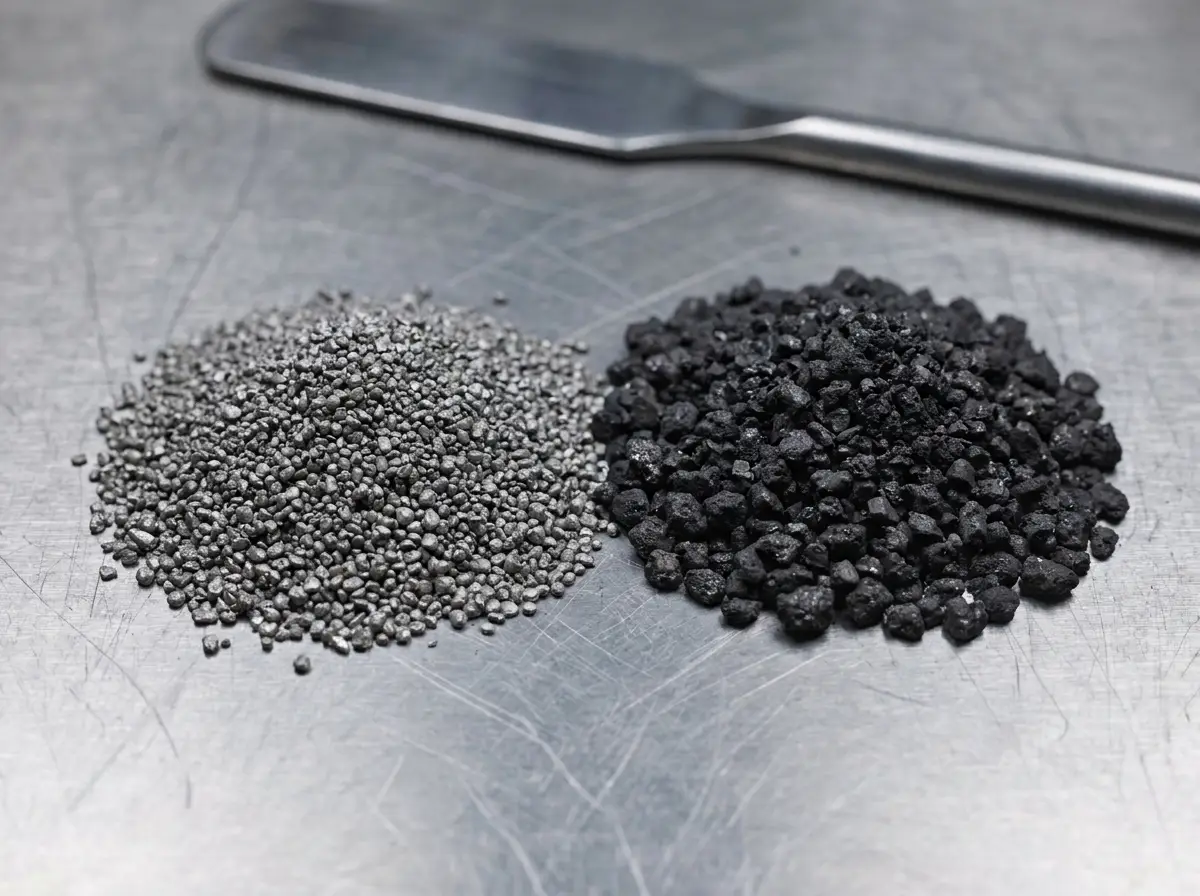
Metallurgical SiC used as a silicon and carbon source in cast iron melting.
Metallurgical silicon carbide is used in cast iron melting as both a silicon and a carbon source. When charged into the furnace it dissociates above about 1400 °C and releases silicon and carbon to the bath. It also promotes nucleation in the molten iron.
In cupola and induction furnaces it can partly replace ferrosilicon and carburiser. Because dissociation consumes heat, the energy balance of the charge must be considered. Slag volume and the effect on the furnace lining should be monitored along with the usage rate.
It is generally added as a proportion of the charge weight. The addition rate is set by the foundry according to target silicon, carbon and furnace temperature.
Typical chemical analysis (%)
| Silicon carbide (SiC) | ≥ 88 |
|---|
Typical ranges. Exact values are given in the analysis certificate of each lot.
Product details
- Grain size
- 0-10 mm, 10-50 mm, briquettes; on request
- Packing
- 25 kg bag, 1 tonne big bag
Applications
- Silicon and carbon source in cupola and induction furnaces
- Partial substitute for FeSi and carburiser in grey and ductile iron charges
- Nucleation support in molten iron